Tuesday, September 29, 2009

Part 13: Bullies, Hazing and Slave Day Auction


"Schoolboys are a merciless race, individually they are angels, but together, especially in schools, they are often merciless."
~ Fyodor Dostoyevsky

"All through my school life I was appalled by the fact that masters and senior boys were allowed quite literally to wound other boys, and sometimes very severely."

~ Roald Dahl


"I won't say ours was a tough school, but we had our own coroner. We used to write essays like: What I'm going to be "if" I grow up."
~ Lenny Bruce


I found myself doing a lot of running. Running to get to class on time, running to get to the dining hall, running from my tormentors.

So I settled into dorm life and my new school. Everything was new, it was terrifying and exhilarating at the same time. There was a predictable daily pattern to life that (for me anyway) was very comforting. This included checking my bed every night to make sure it was dry or had not been
short sheeted and having to check the toilet seat for saran wrap or Vaseline before using it. Sometimes the bedroom door would be wedged shut with coins. But soon the routine included running a nightly obstacle course. In between us and our daily meals were the Sophomores and Juniors at Weiser Hall. Right above the dining hall were the Seniors. There, in the evening twilight, they would lie in wait for unsuspecting underclassmen. No one was really immune, it was a trickle down effect from oldest to youngest. Aah, the gut wrenching agony when you were caught.

Most times the tortures were relatively painless: wedgies, where your underwear was pulled up and over your shoulders, wet willy, where the tormentor, using his forefinger would place a glob of saliva in your ear, or maybe they would just pour a glass of water down the front of the pants! A knuckle punch in the arm and Indian arm burns were very common too. Other times it would involve being dragged, kicking and screaming, into the dorms and having your head dunked in the toilet, a swirley. You could only hope that it had been flushed first. Another popular torture was the cold shower. The north windows in the dining hall were at the same level as the bathroom windows of Weiser Hall. It was a common sight to see the screaming, bobbing heads of the hapless victims as they were held under the cold water. We quickly discovered that the more you resisted the more intense the treatment. The worst torture was the dreaded pink belly. You would have Tiger Balm rubbed on your stomach and then spoons would be used like drum sticks, pounding away until your belly would welt and burn. Sometimes things got out of hand; kids like Mark Perkins were defiant, shouting, cussing and fighting and so got this treatment daily. Others were just unlucky to be a popular victim; sometimes I'd hear kids crying at night. A few students turned traitor and joined their tormentors, helping them track, catch and hold down the other kids. As we little kids searched for new ways to get to supper, so too our tormentors found new ways to ensnare us. They would fan out across our likely routes in ones and twos, waiting to ambush us.


We were paranoid, jumping at the slightest sound. We lived like hunted rabbits; we became quick, nimble and clever. We would leave our dorm early, darting behind bush to tree. Maybe my previous experiences had prepared me, but I became very adept in evading capture. I took to climbing out my bedroom window, dropping the ten feet or so to the ground below and then I would sneak down along a roundabout path through the forested valley. I would come up from behind the gym, creep up the hill and wait behind the shrubs for an opportunity. Then in a mad dash I would sprint for the hall, faster, faster, I can feel their hands reaching for me and then into the safety of the lounge! It was exhilarating and terrifying at the same time. Getting back to the dorm after supper was equally difficult. Woe to the boarder who failed to be on constant alert!

But even after we were safely in bed at night, sometimes they would slip in to our rooms and nab someone and drag them out for torture.

You would think that during the school day it was safer, but being the shortest in our grade made Donald Irvine and I easy targets for the class bullies. One of them came dressed as Adolf Hitler one day and wanted us to salute him. We refused and his gang knocked us to the ground and proceeded to beat on us. This went on for weeks till Donald's older brother Richard came to the rescue. He was a tough looking guy who wore a leather motorcycle jacket. He grabbed one of the bullies by the neck and said "if you ever touch either of them again you're dead". This had the desired effect, although they hated us even more and looked for other ways to humiliate us.

From my very first day at Brent I had heard dreadful rumors of something called Slave Day. During the first school assembly it was casually mentioned along with the Halloween Carnival, Sadie Hawkins Day and Field Day. I had no idea what these events entailed and except for the former, had no idea what they might be.

Apparently, all new students and freshmen would be auctioned off to raise money for something called Senior Skip Day. For one school day we were the property of our "masters". We would have to do chores for them, minister to their needs and worse. The upperclassmen were teasing us daily with the prospect of all the horrible things they were going to make us do when they bought us. On the day of the sale we new kids huddled in nervous little groups while the wolves circled us whispering and laughing to each other. But some of us had a plan. Jaime and I pooled our money together and bid on each other. It was a long drawn out nerve racking experience standing before the entire student body while our virtues were extolled, waiting for that final bid. Some teachers were bidding too! Fortunately we went low, I was sold for a paltry 7 pesos. Jaime sold for 15. The next day proved the worst of our fears to be mostly unfounded. There were rules regarding what could and could not be done. So some boys had to wear their underwear on the outside of their clothes, other boys were decked out in dresses and make up. Other kids had their clothes on backwards and had to walk backwards all day too. Girls bought boys they liked. Some girls were bought by friends, others by boy friends and so got off fairly lucky. Some could only communicate by singing! For those of us who had bought our freedom it turned out to be a really fun day. For those who were not so lucky, it wasn't fun at all.


Friday, September 18, 2009

Part 12: Rules and Regulations


"It's not wise to violate rules until you know how to observe them."
~ T.S. Eliot

"If you obey all the rules you miss all the fun."
~ Katharine Hepburn

"Get your motor running, head out on the highway. Looking for adventure, in whatever comes our way. Yeah, darling gonna make it happen, take the world in a love embrace. Fire all of your guns at once and explode into space. I like smoke and lightning, Heavy Metal thunder. Racing in the wind and the feeling that I'm under

Like a true nature's child
, we were born, born to be wild.
We can climb so high, I never want to die"
~ from the song Born to be Wild by Steppenwolf


I awoke early Sunday morning to the sound of bells tolling. At first I thought it was the breakfast bell, but then realized that the loud noise was coming from the Chapel bells. I thought about trying to go back to sleep for a bit, but the smell of bacon cooking was drifting in through the window and my stomach growled. So I got up and got dressed, made my bed and wandered over to the kitchen. It wasn't time for breakfast yet, but I guess the sight of this forlorn little boy hungrily peering through the windows like some modern day Oliver Twist made them feel sorry for me. One of the waiters (whose name I found out was Arsenio) came over and unlocked the door and let me in. He must have heard my stomach growling because after awhile he brought me out some scrambled eggs and bacon and then some pancakes. This was standard fare on Sunday mornings I found out. The only reason a sleepy upperclassman would drag himself out of bed that early (kids in the lower grades were required to attend all meals) was to partake in this excellent repast.

After breakfast I went back to my dorm and read a book. By mid afternoon the rest of the boarders began arriving. As high as my anxiety had been on my first day at Brent, I was really dreading the first day of classes. All the hub bub of students unpacking reminded me that tomorrow school would start.

Before Chapel that night, a tall, lanky kid came up to me and introduced himself. His name was Norman and his parents knew my parents. He had been going to Brent for several years now and knew all the ropes. The relief I felt at knowing just one person was palpable. He filled me in on some of the rituals and rules. I soon found out Brent had a lot of rules to remember. A lot of the kids had never had so much structure in their lives before. It was a big shock to them.

The meal after Chapel services was completely new for me. White linen tablecloths and napkins, the dining room was only lit by candles.
I had never had eaten a meal by candlelight on purpose before. Before the meal Mr Craig stood up and read some announcements, which really were just some additional rules, one of which was to remind us to stand for the prayer before the evening meal, to hold out the chairs for the ladies. Then we said the meal time prayer which was printed on little slips of paper for us.

Bless us O Lord, this food to our use and us to Thy service. Make us ever mindful of the needs of others, through Christ our Lord. Amen.


Sunday after dinner we gathered in the sala and our dorm master went over the boarding student rules. Attendance at all meals was required except for breakfast and lunch on Saturday and Sunday. You had to get up by 6:00 am, then beds were to be made and rooms cleaned every morning. Demerits would be issued for being messy. You had to be at breakfast by 7:15 or you would get a demerit. We had a dress code. More demerits issued for not abiding by that code. After school we had to sign in and out every time we left the dorm. If we went to the gym, the library, the basketball courts or the girls dorm we had to put down the destination, time and reason along with our printed name and signature. If we left the campus we additionally had to sign out at the main gate. We had to be back on campus by 5:30. Failure to follow the sign out procedure would get you more demerits. We had one hour of free time after dinner and then, when study hall began at 7:30 pm, it was Quiet Time, no socializing or rough housing. Then lights out. Depending on your grade this time would vary. Our room had kids in different grades so they just averaged it out and made it 8:30 p.m. We had Chapel twice a week, once on Wednesdays and again on Sunday before dinner, formal attire required. To receive your allowance, letters to parents were to be written once every two weeks and turned in to the Dorm Master.

When you had accumulated so many demerits you would begin losing privileges, like having free time after school, TV time, being allowed to go off campus. Some kids started getting demerits right off the bat and soon would be
"campused" which meant you could not leave the school campus, or worse "dormed", which meant you were stuck in their dorm for weeks on end.

The next morning after breakfast we were told to assemble by the flag pole. Once there our homeroom teachers organized us by class and took roll. They lined us up facing the flag pole and Mr. Craig walked up and down the rows checking hair length and hem lines. When you looked up at the flag boy's hair was not supposed to touch the collar. Skirts could be no shorter than fingertip length. We were all in our school attire, white shirts and ties, dark slacks and shoes for the guys, white blouses and gray skirts or jumpers for the girls. There were some offenders amongst the day students, a few haircuts needed, a few hemlines too short. Some girls were sent home to change, some boys given a haircut on the spot.

Then we had flag raising and afterwords we went to our homeroom. Our homeroom teacher was Ms. Estacio. The first thing she told us was that our class had the worst reputation in the whole school and that she was mortified at being our home room teacher. She told us not to be embarrassing her by acting up in other classes. I wondered what these kids had done before I got there to get us branded this way. Then she discussed what she expected from us during the upcoming year and told us we would be holding class officer elections the following week.


After homeroom we went down to Amos Hall for a school assembly. We sat by grade and were introduced to our "new" headmaster Dr. Ship. I didn't even know we had an "old" one. We were given handouts and he went over the school handbook and school regulations. There was scattered angry grumblings as various regulations were enumerated. Some of the students were having a real hard time with all the rules. The hair and clothing restrictions were just some of the things the students new to Brent had never dealt with before. Some kids really couldn't take it and went home after a few weeks. It was the early 70's and the anti-establishment rebellion was just beginning to show up at Brent. It would begin with a strong push by the Seniors to loosen the dress code restrictions that year. Apparently there had been a time when Brent did not have "uniforms".

I didn't know it yet, but I was witnessing the end of an era. The traditions and rules that unified Brent and bound us together would all too soon give way to individual freedoms. We were beginning to lose our identity. When I arrived at Brent, there still was an air of magic and mystery about the campus. The school was little changed from the days when it was a single building on a hill. Wandering around the campus, exploring the old buildings, generations of students whispered to me of their adventures among the pines. Brent and Baguio were being painfully wrenched from the golden days of the colonial past and thrust
helter skelter into the 70's. Faculty and staff fought to maintain the dream, while out in the real world challenging the status quo would soon lead to Martial Law. As I grew and changed, I too would struggle to keep my new home from changing.

But in August of 1971 I was a naive 12 year old boy and I really couldn't understand the other students and their problems with rules. I kept thinking
you should live at my house! Yes, there were rules which I had never had to follow before, but now at least I knew what the rules were. I felt liberated.


Thursday, September 10, 2009

Part 11: The Next Day


"School is where you go between when
your parents can't stand you and industry can't take you."

~ John Updike


"Well I left my happy home to see what I could find out. I left my folk and friends with the aim to clear my mind out."
~ Cat Stevens


"My school days were the happiest days of my life; which should give you some indication of the misery I've endured..."
~ Paul Merton


The next morning I woke with a start to the sound of banging and pounding on doors. Mr. Swanson was going down the hallways waking us up. Heart pounding I leapt from my bed. Time to get up and get dressed for breakfast.

Like some threatened forest animal, all my senses were on high alert since I arrived the day before. My brain was busy collecting and cataloging data; new terms and words, new faces and names, new sounds and smells; Fellow boarders on the floor above walking about and laughing (who were they?), teachers down the hall talking (would they be my teachers?). The fresh scent of pine wafting through the open window mingling with the musty smell from the bathroom. The rich browns of the hard wood floors, the peeling mint green paint in the bathroom.

We were first required to brush our teeth and comb our hair. Then make our beds, clean our cubbies and sweep. Failure to do these things would earn you demerits (whatever they were?), and so many demerits would cost you privileges. Then the clanging of the dinner bell! It meant we had 15 minutes to get to the dining hall. I hurried to finish up and then we all walked up to Binsted Hall for breakfast.

Binsted housed the seniors on the top floor, the senior lounge was on the bottom, on the middle floor was the dining hall and just off that was Mr. Craig's room. He had his stereo playing Carol King's album Tapestry at full volume. When it got to the song "Beautiful" he would come bursting into the dining room singing "you've got to get up every morning, with a smile on your face...". I soon found out that this would be his routine every weekend. Breakfast was bacon, fried eggs, cereal, toast, juice and fresh fruit. Pretty good, I thought, although I could see a few kids making faces and poking at their food.

After breakfast we went back to the dorm and "signed out". All Boarders were required to print their name, destination, reason and then sign a sheet everyday whenever we were not in class. This way the dorm master could keep track of us.

Some of us new "Boarders" walked around the campus with our schedules looking at the buildings and seeing where our classes would be. This was my first experience with having each class in a different room or building. We had 5 minutes to go to the locker room, get our books for the next class and get to the classroom.

We started with the main building,
Ogilby Hall. Here was the locker room and just off that was English with Mrs Brewster and my Spanish class with Senora Palacios. On the other end the building, off a large porch just down from the bookstore was my History class with Mrs Ng.

Then we went down to Amos Hall, a four story building which had a wonderful library on the top floor. The Head Librarian, Mrs. Albarracin was just unlocking the door when we got there. I could see right away that this is where I would be spending my free time. There was a reading area right next to the periodicals, well stocked with current magazines and newspapers, with sofas and chairs arranged in little reading areas. We looked around for a little bit and then headed downstairs, past the school auditorium on the 3rd floor, already set up for the first school assembly on Monday. Then we went down to the lower level, here I would have Math with Mrs Alcantara and Science with Mrs Rivera. On the very bottom floor around back was Mr. Asiatico's classroom where my roommate Jaime's Earth Science class would be held.

We checked out Weiser Hall, consisting of dorm rooms for 10th and 11th graders on the top floor, my Typing class with Mr Reyes was on the middle floor and the school canteen on the bottom level. The canteen was already bustling with laughing "day" students. It made me wonder why there were so many students hanging around campus on a Saturday. I was soon to find out that Brent was a popular place to hang out after school and on the weekends. When we went in the door Manong Freddie was busy grilling some burgers. The smell was heavenly. He welcomed us in and asked us all our names. Some of the kids got pop and candy, but I still didn't have any money. "You should write and ask your parents for some" one of the kids said. Another said helpfully "well, we do get our allowances next Friday."

Right. You don't know my dad.

I knew I was getting an allowance, but I also knew it wasn't going to be much. My old allowance had been the occasional peso now and then. My parents told me they had asked another missionary family what they gave their child. My Dad took that amount, divided it in half, then divided in half again. I would soon find out that I had the smallest allowance of any of my contemporaries who boarded at Brent.

Then we walked down to the gym. This is were I would have P.E. with Mr Allegre. I was surprised to see that all remnants from Registration Day the day before were gone. The floor had been covered with 4x8 sheets of masonite to protect the basketball court, these were all put away. It seemed immense, certainly the biggest gym I had ever been in. A few of the older kids were playing basketball as we filed past to go down to check out the locker room.


We were headed back to the dorm when I caught sight of something gut wrenchingly familiar: a pink briefcase bouncing up the hill. It was attached to my father. When he had got back to the Guest House down in Manila he found a telegram from the Headmaster informing him that would have to return and get the missing items on the required items list.

Dad was not happy, he never liked being told what to do. The cost of flying back to Baguio and messing up his schedule had him boiling. For my Dad, parting with money is like asking him to donate both kidneys and a lung. Somehow, this was my fault.

We went downtown and began shopping for clothes. Two weeks worth of white dress shirts, dark slacks, underwear, t shirts, socks. A pair of tennis shoes, a clip-on tie, a sweater, a jacket. The exact amount, not one item more, nothing from the "suggested, not required" items list. It took forever. By the time we got back to the school he was pretty hot.

This was a first for him and he discovered three things: he had never bought clothing for kids before and had no idea how to do it; he had no idea how much it was going to cost; he totally miscalculated the amount of time it would take to get all the items. He had missed the last flight out and had not made reservations to spend the night.

So, it was not too surprising then, that soon after we got back to Brent he was in a nose to nose argument with Mr. Craig. It began with his demand that the school put him up for the night. From his point of view the school was the reason he was stranded and therefore owed him lodging. Mr. Craig, the ex Marine, stood his ground and told my dad that the school was not a hotel. Dad, the ex Sailor, was not having any of it. No Jarhead was going to tell what he could or could not do.
They exchanged some expletives and the dispute ended with my father stomping off.
(Dad had a real problem with Marines, stemming from his days in the Navy. He relished telling us stories of the tricks they played on the Marines and the bar fights they had.)

So I was shocked to see him, just before supper, back on campus again. Dad had called the local Episcopal Church office and asked Bishop Cabanban if there was any place the church could put him up for the night and the Bishop said "You can use the
Bishop's Cottage at Brent."

That night at dinner, Mr Craig was even more surprised and his face went red as he stormed over to the table where we were sitting. He started in on Dad, who gleefully pointed to the distinguished gentleman next to him and said
"I'm the Bishop's guest".

This was a hard pill for Mr. Craig to swallow, because he had to sit at the table with the Bishop and his "guest". Dad was looking pretty smug and happy and I thought well it's now or never, so I took this golden opportunity to ask my Dad for his other lung and heart:
uh, can I have some money Dad?

For a second I thought one of us was going to die. Dad choked on his water, but with the Bishop and the assistant headmaster looking at him he was trapped. He pulled a couple of pesos out of his wallet, then after a quick glance at the watching faces pulled out another 4 pesos and slammed it on the table (the equivalent of just under a dollar at the time).

"That's a lot of money. It is going to have to last you a while!"

Mr. Craig got a funny look on his face, cleared his throat but never said another word.
But after that the tough, gruff and blustery Mr. Craig was always kind and encouraging with me.

This still is one of Dad's favorite stories. Of course he leaves out the last part and the part about why he needed a place to sleep in the first place.


Friday, September 4, 2009

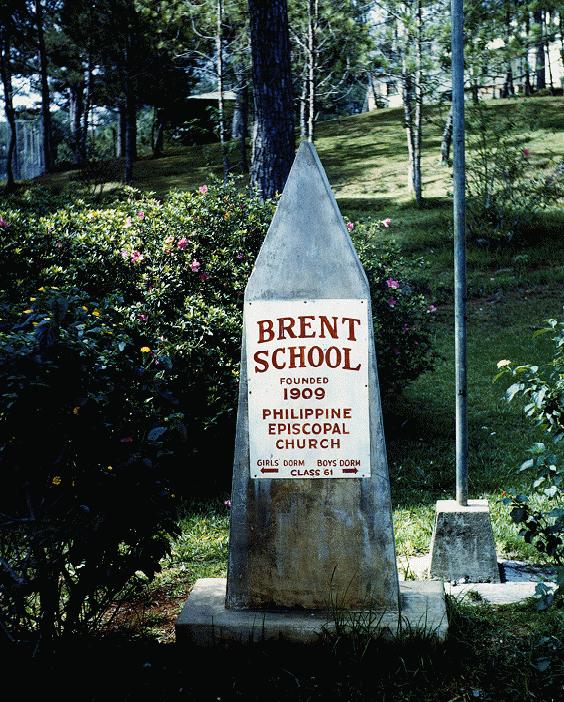
Part 10: My First Day at Brent School


"My dream, I remember, when I went to
boarding school, was to have a little nook
someplace where nobody could get at me ..."

~ Harry Mathews


"As you get older, you look back and try to make sense of the sort of person you have become. And I think the most important thing that happened in my childhood was the first night I went to boarding school at the age of seven. I remember that night, and the loneliness. But I think it was that first night at seven years old when I felt something had broken, and I've spent my life trying to get back to that feeling of home."
~ Jeremy Irons


In August of 1971, my father took me away to boarding school. I was 12 years old.

Three weeks prior to this I don't remember my parents ever discussing boarding school, which is not surprising since we were never told anything.

"Oh, by the way, you are going to Brent."

What is Brent?

I found out it meant that I would live and eat at a school 465 miles away in the mountain city called Baguio, a trip that back then took us two days. There would be other American kids there and it meant I could go to a college back in the U.S. The morning I left Mom presented me with a wrist watch and a little Swiss Army type pocket knife that were her father's. Dad wanted to keep the knife, but Mom took him into the bedroom and yelled at him for an hour. He came out with three pocket knives including the one Grandpa gave me.

"OK, pick the one you want"

I picked Grandpa's and Dad stomped off to the bedroom. Then it was time to go. All the students came to say goodbye, Auring hugged me tight and whispered "you're my big boy".

Two hours later, with all my worldly possessions in tow, Dad and I were flying to Manila, where we would spend the night at the Guest House. The next morning we took another plane up into the mountains to Baguio. The trip to Brent was wet, dark and gloomy. July is the beginning of Rainy Season in the Philippines, by August it was full on and it rained all the way there. We didn't talk, my stomach was in knots. After all the times we moved, all the times I was the new kid, I should have been used to the kind of feelings I was having now. I was agitated, nervous and apprehensive. This time it was different, this time it seemed permanent.
It was drizzling as we rode in the taxi from the airport to the city, the fog so dense everything was gray and in shadows, but by the time we got to the gates of the school the rain stopped. If I close my eyes I can still hear the tires of the cab hissing on the black, wet asphalt. As we drove up the hill, the trees and the buildings leapt out of the mist. Their colors, the greens, the rusts and the yellows were so vibrant. It was all so mysterious and wonderful, as if magically, here in the mountains of the Philippines, a quaint little English village appeared (or rather, what I thought an English village might look like).
The taxi stopped, we got out, my father took my little suitcase out of the trunk, set it on the ground, shook my hand and said
"see you later" .

Then he climbed back into the cab and drove off. I remember the feeling of panic as I watched it disappear around the corner of the building. I was terrified.


Dad had dropped me off in front of the school bookstore, so I went inside and asked the clerk, Manong Jeremy, what I was supposed to do. He directed me to the office, where the receptionist found someone to take me to my dormitory. It was on the lower floor beneath the school infirmary. There I met my dorm "mother", Mrs Norma Swanson who showed me to my room. I was the first to arrive.
My room held six or seven metal army style cots. The beds were arranged in rows in front of the windows along two walls, on the other two walls were little built-in cubicles for each student, consisting of a clothes closet on one side and a desk on the other.
There was a bathroom painted a minty green, with two shower stalls, two toilets and two sinks. I picked a bed in the far corner next to a window that looked out over a pine forested valley. Mrs Swanson noticed right away that I only had one very small suitcase. "Don't you have any bedding?" She then asked where my parents were and I told her my father had already left. Even though my parents had been sent a list of required and suggested items for me to bring to school, Dad had gone down the list and decided what I would really need.

"Why would he need that?"

Growing up on a farm during the Great Depression, wearing the hand-me-downs of his older brother, enduring the taunts of the better dressed kids in town, Dad had a real problem with us having it any better than he did growing up. The expenditure of any funds, no matter how meager, went against everything he believed in. He detested private schools in general and boarding schools in particular. He felt they were elitist, only for the rich and affluent and Brent's required items list only confirmed his suspicions. I didn't know all this then, I just desperately wanted to not get in trouble on my first day of school.
First, Mrs Swanson sent me over to the school linen room, which fortunately was in the same building. I signed out wash cloths, towels, sheets, blankets, pillows and pillow cases from Mrs. Tabafunda. Then she had me make my bed and arrange my belongings in the locker next to my desk. She looked at the bare shelves and said "you are going to need a lot of stuff".
Besides the bedding, I did not have the required dark slacks and white shirts and ties. I did not have a jacket or a coat. I did not have a two weeks worth of a change in clothing, I did not have any toiletries. Craig Swanson, our dorm father, walked me up to the school store to buy soap, shampoo and toothpaste. I had to sign a chit for it because Dad didn't give me any money.
After that he walked me down to the gym to register. Parents were there with their kids helping them through the process. I went to the "W" table and filled out the paperwork. My classes had already been predetermined for me and I had a full schedule. Math, science, history, English, Spanish, P.E., music and art. I was given a school handbook and list of rules for boarding students.
We filed on through, there were sign up sheets for different clubs and sports. At the end of the line stood an imposing man and a row of stools with some dejected looking kids sitting on them. For those male students whose hair did not meet school requirements, "free haircuts" were being handed out. Hair could not touch the collar, be in your eyes or hang over the ear. Mr Craig, the assistant head master and former Marine, would eyeball each boy has they filed past him. Those that did not pass the muster would be then directed to a stool where Mrs Brewster would put a towel around their necks and start cutting. My hair was still fairly short from my last buzz cut, so he didn't even give me a second glance.

After registration I took my class schedule back up to Ogilby Hall and the bookstore and handed my list to Manong Jeremy. He and his assistant Franklin went down the list and collected the things I would need for the semester. Besides the school books I got gym shorts, t-shirts, notebooks, BIC pens and Mongol #2 pencils, 2 padlocks for my lockers and my assigned locker number. I also got a desk lamp for my cubicle. Then I carried my supplies and found my locker which was conveniently located next to the boys restroom. I kept the same locker for the next 5 years. I still have the combination lock to this day.
At lunch time my dorm parents showed me the way to the dining room. I was one of the few kids there. It was a big room with windows at the back looking out across to the library, tennis courts and elementary buildings to the west. Waiters in dark slacks and white shirts brought food out to the tables which was served family style. First we said the school mealtime prayer:
Bless us O Lord, this food to our use and us to Thy service. Make us ever mindful of the needs of others, through Christ our Lord. Amen.

Our waiter was named Domingo and I liked him very much. He had no problem sneaking extra food off another table when the other waiters weren't looking to make sure I got enough to eat. He would bring a platter or bowl of food out to the table, make the sign of the cross over it and say
"Dominus vobiscum".

After lunch I went back to the dorm and spent the rest of the day in my room reading and waiting. Late that afternoon the other kids in my room began arriving with their parents, most with 2 or 3 suitcases, or with big trunks. They were loud and boisterous, lots of hugs, laughing and talking. I quietly sat on my bed, trying to be invisible and pretending not to notice. I met my roommates: Jaime Case, Hata Dimaporo, Efren Herrera, Joey Butler and William Gibson.
He carried an umbrella with him and was wearing a navy blazer, a sweater vest, a yellow shirt and a red tie. With his umbrella in the crook of his arm he stuck out his hand and said “I am William Gibson the III”. We called him Billy. Jaime took the bed next to mine.

Most of the parents were in town for the weekend and
their kids wouldn't even be moving into the dorm until the day before school started. So, after they got their beds made and clothes put away, they took their kids out for dinner that night. I had mine in the dining room with my dorm parents and some other teachers.

After dinner that night I lay in bed wondering what was going to happen to me. I didn’t know it yet, but I would never feel the same way about home or my family again. I was free.

Saturday, August 29, 2009

Part 9: The Nightmare


"Nos perituri mortem salutamos, sola resugit vita" ~ Cat Stevens

 
"And I said, Oh that I had wings like a dove!
for then would I fly away, and be at rest."

~ Psalms 55:6


By 1969 my parents' various projects started showing success and then the pace picked up and their work load really increased. Dedicated workaholics, I can remember Mom and Dad working late into the night on reports, sermons and lectures.

My parents took their mission calling very seriously, especially Mom. When we left Iowa in 1964 they sold their home and at her insistance, donated the proceeds to their church. The poverty in the Philippines really bothered her and they worked hard to make a difference. She continued to provide financial aid for college students, (including tuition, room and board, clothing allowance and a little spending money) always trying to squeeze one more student into our budget. Mom branched out, working with mothers, educating them on birth control, health and nutrition.

If some kid needed clothes to go to school she would have Mrs Hinakay make them. If a family needed food, she would give them groceries from our pantry. Then Mom began funding corrective surgery for children with harelips, sending the mother and child to St. Luke's Hospital in Quezon City to get the needed surgery. She sent dozens of kids off to have the procedure done.

For Dad, I think we kids were always a bit of nuisance, a hindrance to his life and work. He never saw the day to day task of raising children as his responsibility. For Mom, it was escaping first from the controls of her mother and then the control of Dad. She had a purpose, she had a job and for the first time in her life she had a sense of self worth. Having Auring and the students relieved them of the duty of child rearing. So you see, what I am trying to tell you is that my parents were doing good works, but sometimes did or let bad things happen. Keith would later charitably say "they were very good parents when they remembered."


While Dad was busy working with farmers and when Mom was working on the floating clinic sometimes we would only see them once or twice a week. Keith and I were in school, the younger two were home with Auring. Even when they were in town they would be gone most of the day. There were the Monday and Thursday night prayer meetings at our Church. Dad was in the Rotary Club. More and more of our time was spent with Auring and the students, especially Tony.
I was traveling less with Dad, he had became moodier, irritable and even more short tempered. Maybe it was because he was so much busier, maybe it was because we were older now, but he certainly was much less tolerant of our childlike ways. He was a proponent of the old adage: "children should be seen and not heard!" and now added to it: "not seen or heard!".
My parents relationship, always loud and volatile, went into holocaust mode. It was hard to tell who was winning one of their shouting matches. Suppertime now was dreaded. We tried to eat quietly and quickly. Any etiquette errors were dealt with quickly and harshly: failure to handle the silverware properly, or promptly pass the butter or the rolls would result in something Keith called "fists of fury" (for years we flinched every time Dad raised his hand), reaching for the potatoes without asking would result in your hand being pinned to the table by a fork. If we were lucky we could get done before the interrogation started. 20 questions was a game we never could win. It would start innocuously enough, "What did you do today?" but there never was a correct answer and soon the trick questions would begin. Again, if we were lucky we could escape with a berating lecture on why we were knuckleheads, imbeciles and morons. More often than not we were very unlucky.

Crying was forbidden. Offenders of this crime were told
"I'll give you something to cry about!"

Then he would reach for the yardstick.
Like the
Sword of Damocles, it was a constant reminder of our impending doom, the stainless steel yard stick which sat behind Dad's chair, it's sole purpose: our betterment. The heavy steel would leave angry bloody welts on our backs, thighs and calves.

My brother was in perpetual competition for our father's favor, always seeking to be the successor to Dad's throne. This was something that could never be won, I learned long before to stop trying. Dad was incapable of praise, no matter how good you did he would point out your mistakes. The closest he came was in giving back handed compliments, the "but" always overshadowing the accomplishment. Still, Keith kept trying to gain recognition and when that didn't work he tormented, bullied and beat the two youngest brothers whom he saw as a threat. This, coupled with his whining and complaining, so successful when he was the youngest, now garnered him beatings and he most often got the worst of Dad's wrath. The yardstick was not the only weapon in Dad's arsenal, there was the belt, the whip and the axe handle. The dull whump of the heavy wood striking soft flesh echoed in the background of my dreams.

Around that time I began having a recurring nightmare.
I am in a low ceiling stone walled room. It is slowly filling with sand. I am feeling about in the darkness searching for a stone, a keystone. I desperately sift my hands through the sand for that stone. While this is happening I can see faces, they are talking rapidly as if the sound was sped up, but I can still understand what they are saying to me: "You're not good enough. You're stupid. You're a failure. You shame the family." But I can't find the stone. The room fills up. I die.

The first time I had the nightmare I was on a trip with Dad. I awoke screaming
I can't find the stone.

I would have this same nightmare many more times over the next nine months. The last time I had it I was home in Tacloban.

Dad
was tired and cranky and like every time he got home from a long trip he started yelling as soon as he walked in the door. We got sent to bed early that night. But this time when I awoke from my nightmare, I found myself knocking on my parent's bedroom door. Dad threw open the door and I groggily held out my hand; I had found the keystone! In the palm of my hand was a smooth river stone the size of a quarter, it had a white swirly mark on it. I didn't die this time.
Look, I found it Dad.
"You don't throw rocks!"
My father grabbed me by the collar of my t-shirt, lifting me off the floor. In rapid succession he punched two, three, four times then threw me to the floor. Then he kicked me twice, the second sending me flying across the dining room, my face leaving a bloody smear as I slid down the wall.

I didn't hear Dad leave that morning, I didn't go to school that day or for three days after that either. I remember Auring washing the blood from my face, gently applying ointment to my swollen ribs, eyes, nose and lips. I remember laying in bed listening to them scrub the blood from the wall, the smell of the bleach. I remember Auring spooning me soup, the whispers, the guarded conversations between her and the students. When my eyes were finally able to open on Wednesday she decided that I should stay home till I looked more presentable. On Friday afternoon, we kids were told "Your father is coming home tomorrow, everyone needs to be on their best behavior". But before he arrived home I was taken to the movies by Tony, the other kids sent to visit some friends. I can still feel the dread as we returned home, the strength of Tony's arm as he pulled me behind him when my father appeared suddenly at the door.
"I want to talk to you"
We sat down in his office, my heart pounding and I tried to hide the bruises on my face.
"When I was a kid I swore that I would never be like my father. I found out that I am just like him."

That would be the only apology I would ever get from him.

From now on, whenever Dad returned home from a trip we were removed from the house "on errands". If there was no one to take us away, Auring would hiss
"quickly now, run!"

I would go and hide in the Calamansi orchard or in a field under the cassava (called kamoteng kahoy) plants where I had dug a trench the length of my body. On bad days I would cover my body with the dirt so only my face was uncovered. There I would lay for hours till it was dark, invisible to the world, staring at the stars, praying to die, waking at the sound of Auring's voice softly calling for me.

Some months after that my parents sat me down at the dining room table and told me they were sending me away to Brent.
What's Brent?
A school, I was told.
Where is it? In Baguio.
Where will I sleep, where will I eat?
At the school. You will live at the school.
Why? Tell me what I did wrong? I will be better.
I cried, I promised I would try harder. I could live with friends, I could sleep in the bodega. They wouldn't know I was there.

My father laughed and said
"This won't kill you. It will make you stronger."

My mother said "Don't worry, you will love it".
Two weeks later Dad and I left for Baguio.
Many years later I learned that it was her idea to send me away, which if I had thought about it, made sense as Dad would never willingly part with any money, let alone on something as frivolous as boarding school. Dad was dead set against it and only after many a heated argument did he relent, on the condition that he would not have to pay for it. So, at great personal expense to her pride, she wrote to her mother and asked to use a portion of my trust fund to pay the portion of the boarding school expenses not covered by the Mission Board.

Why she chose to send just me has been the subject of bitter recrimination on the part of my brother. He blames her for all the misery in his life.
I think she saved my life.


"I think it's because I'm clumsy
I try not to talk too loud
Maybe it's because I'm crazy
I try not to act too proud
They only hit until you cry
And after that you don't ask why
You just don't argue anymore
You just don't argue anymore"

from the song Luka by Suzanne Vega

Thursday, August 27, 2009

Part 8 : The S and the F words


"There is no sincerer love than the love of food."

~ George Bernard Shaw


"Surely, I said, knowledge is the food of the soul."
~ Plato


Although it may not seem possible, I actually did find time to squeeze school in the first five years we were in the Philippines.

I attended a local elementary school in Quezon City and was taking Calvert Home Correspondence courses as well. But I was having a tough time with Tagalog in the grammar and spelling departments. Dad got into it with the teacher which resulted in them failing me even though I was passing all my other classes.

When we got to Tacloban in 1967 I went to a new school and this time my parents insulted the principal and they would not let me return the following year. Not only that but we were black listed from all schools within Tacloban and surrounding towns! That was fine with me, I was still doing the Calvert so I would take the classwork with me when I traveled with Dad.

We really traveled far that year going south to the island of Mindanao, visiting the cities of Cotobato, Davao and Zamboanga. There we visited the vast rubber, pineapple and banana plantations. The amount of waste was shocking. Bananas that were too short or too long were loaded into boxcars and dumped in the river. The river was choked with bananas. We went west to the island of Negros, going to see Dr. Behrens and his veterinary vaccination program at Silliman University in Dumagette City and we went north to see Dick Fagan's Heifer International project at Dasmarinas, Cavite.

In May of 1968 my brother Steve was born so Mom was around to work with me on the home correspondence courses.

When Mom went back to work I ended up going to a little barrio school an hour away. I would head off to school every morning with my little tin
bento box of steamed rice and tuyo ("aromatic" whole small dried fish). After half a day in a hot classroom, opening that bento could really knock you off your feet! I had to get up extra early every morning to catch a public bus or Jeepney and would get home around 6 or 6:30 every night. I learned to carry 10 centavos in my ear for my fare. Some days there was no space to sit inside so I would stand on the back bumper and ride on the outside all the way home. One day I got out of school and waited but no buses passed the school for hours. Soon I was standing in the dark and beginning to panic. Finally a Jeepney came by and I was able to get home by 9:00. Auring of course was waiting for me in the street in front of our home. Mom and Dad were oblivious to the fact that I had not been home for the past 3 hours.

Bethany Hospital had a little canteen where I would go for my afternoon fix of Royal Lem-O-Lime, Royal Tru Orange or Royal Ginger Ale. I would get my candies there too, chocolate Curly Tops, butterscotch White Rabbit and crumbly powdery ChocNut.
Locally made Tamarindo (made from Tamarind) and Polvoron (a powdered milk candy) were some of my favorites too.


I had begun taking piano lessons the year before at the local convent. I had my first piano recital one Friday afternoon, and came home to change into my Sunday best. My parents, just back from work were reading the newspaper.


"you look fine the way you are!"

So they sent me off in my t-shirt and blue school shorts. I walked in and the hall was filled with parents and relatives, everyone was dressed like it was First Communion. I could hear the buzz of whispers and was so embarrassed I tried to sneak out but Sister Clare, for whom I would do anything, smiled her mesmerizing smile at me and said "go on and play, you will do fine". I went out and played my number without mistakes and then hurried home.

"How did it go?" said the voice behind the newspaper.

Everyone was dressed up in Barong Tagalogs and Maria Claras, I was the only one in shorts...

"Ha! That's funny. Imagine that."


Auring, however had made for me an extra special dinner that night to help make up for the lack of interest in my endeavors.

If I haven't mentioned it before, Auring was an excellent cook. Besides Filipino food, she was handy at American style dishes. Her fried chicken was always crispy and not greasy, and served it with mashed potatoes dotted with butter. She also made these wonderful potatoes that were parboiled, then browned in butter and then roasted which she served with roast beef and gravy. Meatloaf served with boiled potatoes tossed with fresh chopped parsley. A potato and hamburger soup with kalamungay leaves in it. Man O man she could cook!


Aah, the Food. The Philippines has its own culinary cuisine unique to Southeast Asia. From beverages to desserts, it was a mixture of Malaysian, Spanish and Chinese styles.

Dad would eat just about anything, while it took quite sometime for Mom to accept and enjoy the local delicacies. As for the kids, we loved the new foods and our stomachs quickly went native.

Although Auring now cooked exclusively, Mom still approved the menu for the week. She tried to make sure that we had a least 3 American style meals a week. I think because food was her link to "Home", when we first got there we ate mostly western style menus 6 or 7 days a week. But slowly Auring began to incorporate Filipino foods into our diet. The one area where Mom put her foot down was desserts. She insisted on cakes and pies, although sometimes she would let the delicious caramel custard called
Flan slip through. Another one was Auring's fried bananas. She would fry whole bananas in oil, then take them out and roll them in sugar. They were so good. But we never had any of the rice desserts like puto or suman. Those we would only get if someone brought some over.

So, fresh fruit like bananas, caimito, guavas, Jackfruit, lansones, mangoes, papayas and pineapples began showing up at all our meals. Then in the mornings we would have pandesal, little rolls, crusty on the outside and soft on the inside. With all the students now living with us, rice was now cooked morning, noon and night. It was only put on our table at lunch and supper, but was available for breakfast if someone wanted it. Even when we had potatoes at supper, there was always a steaming pot of rice in the kitchen. Soon I was introduced to the dried fish called tuyo and bulad served with garlic fried rice and fried eggs. Then fresh fish began to be a regular entree, like escabeche, a crispy fried whole fish with a slight tang from vinegar.

We had all kinds of fish, which Auring bought directly from the fisherman the day she cooked it. All of our beef was bought fresh. We raised our own chickens and hogs, so we never bought those at the market. Auring would go early every morning to the open air market to do the days shopping and I would go along. If we were having fish that day we would head over to the wharf side of the market to see what the fishermen brought in. She would go up and down the rows looking at this catch and that, checking the eyes to make sure they were fresh. Eventually they got to know what she liked and would send over a selection to the house for her to pick through. If we were having meat we would head over to meat market where the meat was freshly butchered. She would look everything over then tell the butcher what cut she wanted. He would grab a side of beef and chop off whatever Auring ordered.

One day we got on a jeepney to go to the market. It was half full and we sat down next to a man who was taking up most of one side of the bench seat. He was wearing a long t-shirt pulled down to his knees. Auring slid over to make room for me bumping his legs. He cried out in an agony stricken voice,
"Please Manang, kakatuli ko pa lang.
"
He had just come from being circumcised and was in great pain!


One of the dishes that Auring made was
Paella. Chicken, shrimp, rice, Chorizo, hard boiled eggs, peas, green pepper, garlic, onion, cooked together. Yowza! I loved the way the flavors blended together.


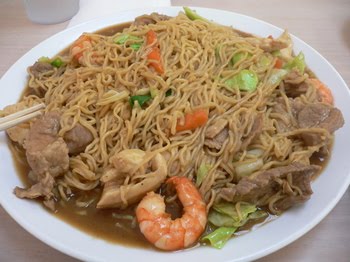
Another great dish she made was
Pancit Canton. It is a noodle dish with bits of meat and crispy pieces of stir fried vegetables.


Then Auring began serving Adobo. Adobo is a kind of stew which can be made with beef, chicken, pork or seafood and served over rice. The meat is browned in hot oil, then added to a pot with fresh grated ginger, minced garlic & onions, shredded carrot, bay leaf, soy sauce, vinegar and cracked peppercorns. Adobo became a regular part of our diet and her Beef Adobo was my favorite.